|
|
| |
instep
issue
When fashion gets freaky
A debate on the pros and cons of animal testing by the cosmetic
and fashion industry has always existed. It is perhaps the most
brutal side of the fashion world. The big question is that is it
really necessary? Instep takes a closer look...
By
Sonya Rehman
|
| |
Fashion
is an individual's personal statement – a declaration which
says: "Hey now look here, this is how I define myself."
It is a statement which does not have to be spoken…rather, adorned.
Similarly make-up, being an imperative branch of fashion, is an open
non-verbal announcement – it speaks, giving off certain signals
in the process. |
| |
But
dig the surface of the fashion and cosmetic industries slightly deeper,
and you will realize it is not all that pretty as it's made out to
be. When cosmetic companies (which have for decades now) test their
hodgepodge of (often lethal) ingredients on animals and when the hunt
for fur and skin exceeds man's necessity (which leads to the hacking/bludgeoning
of innocent creatures), that is when you realize that fashion, can
get brutal and grotesque.
In 2002, after more than a decade of debate regarding animal-testing,
the European Union (EU) agreed to implement an almost total ban on
all animal-testing in the cosmetic industries beginning from 2009.
The anticipated ban, as expected has not been met with well by some
of Europe's leading cosmetic brand heavy-weights. L' Oreal for one
has lodged a case in defiance of the ban at the European Court of
Justice in Luxembourg – pushing for the prohibition on animal-testing
to be lifted. |
 |
| |
Ironically
enough, go-green-anti-animal-testing The Body Shop agreed to be taken
over by L'Oreal (in 2006). The takeover truly smashes The Body Shop's
image (of being an ethical animal rights defender) to smithereens
of 'all talk', hypocritical yap.
From agonizing skin penetrations, eye tests (which leads to disease
and blindness), being force-fed test solutions (the LD50 test), chucked
into cramped steel cages in laboratories and having to deal with continuous,
additional abuse (both physical and mental) – all at the cost
of what? 'Beauty'…makes the word sound like 'execution' doesn't
it? Well it's spot on, truer than you'd like to think.
With millions being pumped into fashion/cosmetic industries –
the business is a thriving one, yet marred with innocent blood.
|
 |
| |
| While
some cosmetic companies, such as Aveda, Freeman, Avon, Clinique, Estee
Lauder and just a handful of others who have strong stances against
animal testing, other companies prefer to remain mum on the issue
by not declaring it on the back inscriptions of their product bottles/packaging.
|
| |
But
eco-friendly, anti-animal testing cosmetic products have only recently,
in the past few years, become the new 'it' way of fashion. 'Go green'
is the West's most recent fashion buzzword - and this 'movement' has
slowly and surely spread its way to aid in the combat of animal abuse
(by way of cosmetic tests).
Yet to think that animal-testing can be absolutely eliminated would
be thoroughly utopian a view, a hope. In those countries where animal-testing
is banned, cosmetic companies simply have to resort to setting up
laboratories (or sub-contracting cosmetic specialists) in countries
where no such ban exists. It is as simple as that. |
 |
| |
| Yet
the war that animal rights NGO's and animal welfare organizations
have continued to fight does an immense lot of good. But how much
is enough? The more awareness via promotional print/broadcast campaigns,
the better. |
| |
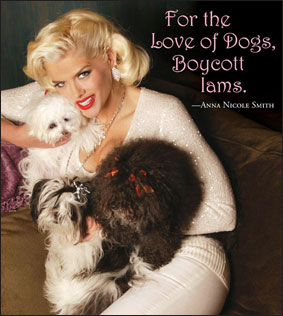
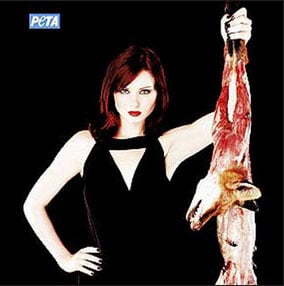
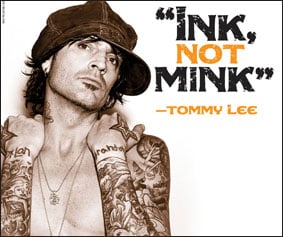
| PETA
(standing for People for the Ethical Treatment of Animals), has for
years championed the rights of animals by cracking down on illegal
laboratories, bringing to light cruelty and abuse (via undercover,
hidden-camera investigations) and using thoroughly well-executioned
print and broadcast campaigns which feature some of the biggest names
in Hollywood and music (in the West), fully supporting PETA's fight.
Some of them are; The Beastie Boys, Pink, Paul McCartney, Pamela Anderson,
The Black Eyed Peas, Sarah Jessica Parker, Tommy Hilfiger, Phil Collins,
Good Charlotte and many others. Of the many battles PETA has fought,
the most significant one with regard to fashion was when in 2006,
PETA urged Polo Ralph Lauren to quit selling fur – which it
did! |
 |
| |
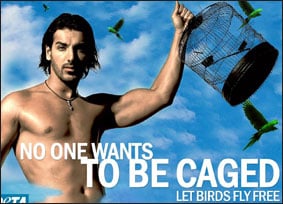
Across the border, PETA India's Honorary Committee consists of names
such as Rohit Bal, John Abraham, Shilpa Shetty, Jackie Shroff, Anupam
Kher, Gulshan Grover and many more, all of which actively take part
in promotional campaigns that champion the rights of animals in
India.
And then there are those celebrities who take it one step further.
One such example is Paul McCartney's daughter, Stella, who launched
her label CARE in 2001. Stella's label focuses on leather-free suede
shoes and handbags and now more recently, she's introduced organic
skin-care products (which consist of ingredients such as green tea,
rooibos and red sorrel) to her animal-cruelty-free cosmetic line.
That being stated, fashion/cosmetic industries tread a very fine
line between glamorous and unethical. From putting animals in harsh
conditions under cosmetic trial-runs and slicing the fur/skin of
their backs (to make elaborate pashmina shawls, mink coats, python
boots, crocodile-skin bags etc), one wonders what's next? Slinging
human carcasses over one's shoulders perhaps?
In relation to Pakistan, people settled in the northern areas have
a reason for using animal fur/leather to protect them against harsh
weather conditions. In that regard, it is a 'necessity' not a fashion
statement for crying out loud.
But when thousands of rupees are spent on branded apparel/accessories
(animal shells) and cosmetic products (tested on animals) sent in
from overseas, that is what's troublesome. It is simply fueling
the fire.
If Pakistani upper/middle classes can afford fashion/cosmetic products
that are shipped in from New York, London, Paris (the world's biggest
fashion hubs) etc, better and more informed decisions can surely
be made. 'Pleather' (a name for fake leather) is gaining quite a
bit of popularity abroad – as it not only looks but also feels
like 100% pure leather.
And regarding cosmetics? Before you buy a branded lipstick, shampoo
or face wash, turn it over and skim through the product's ingredients,
because remember, what you'll be putting on your skin probably killed,
hurt, and damaged hundreds of animals at your expense.
|
| |
|